

From Monteiro Lobato to Land Rover: How the image revolutionized copywriting
With the rise of Artificial Intelligence, many people think that creating good copy has become just a matter of pressing a button. But the truth is that anyone can generate plain text — the real challenge is creating something authentic, persuasive, and with a soul. 💡 To master today's writing, we need to understand where it came from!
REDAÇÃO PUBLICITÁRIA & COPYWRITING
IGOR M. ZIMOLOG
8/5/20263 min read


With the new era of Artificial Intelligence, many believe it has become very easy to draft copy or write compelling ad text that sparks desire, but they are sorely mistaken. While using AI has indeed made things easier, simply glancing at a sentence is often enough to tell it was "written" by an AI. This lack of authenticity has introduced issues that AI cannot fix. Even so, you can use AI as a tool to help you write better, rather than asking it to do the work while you just copy and paste.
So, let's put this into practice by trying to craft a beautiful piece of copy with your own originality. Artificial intelligence can assist you with many tasks and perform various actions, but it will never create something original in the way you can.
Today, we are going to analyze advertising language along with the different approaches and functions used to persuade. Remember that we learn from our mistakes—keep practicing, and one day it will come naturally to you.
Here is an example of a 1940s ad for Biotônico Fontoura. We can observe that the copy does not use a direct sales pitch. First, the text explains the child's situation, followed by an additional section titled “Medicos illustres” that establishes Dr. Luiz Pereira Barreto as an authority. The illustration serves a purely decorative purpose and does not tell a story; it is simply a boy yawning from “somno” (drowsiness) accompanied by the headline: “Ás 9 horas da manhã - Não é normal este somno!” (At 9 o'clock in the morning – This drowsiness is not normal!).
Until the 1950s, advertising copy consisted almost exclusively of poems. The texts were wordy and ornate—meaning very long and written in complex language. This was because poets and literary authors held copywriting positions; Monteiro Lobato and Olavo Bilac were prime examples of figures who wrote copy. It was not copywriting as we know it today, but rather a display of classical, artistic style instead of the direct, persuasive, and commercial language used nowadays.
Before the 1960s, the image was merely an illustration. Its sole purpose was to support the written text—whether that was a poem or a lengthy ad that was already self-explanatory. Thus, the text delivered the message, not the image.
However, starting in the 1960s, with the arrival of television, advancements in printing, color photography, video, and imagery, the visual aspect took on a core meaning. It began to convey multiple layers of significance; it was no longer just a standalone, meaningless illustration, but a story in its own right.
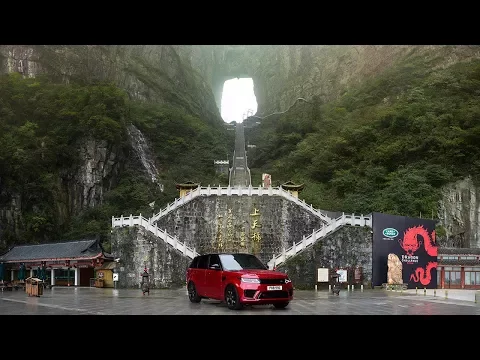
A practical example of this is the Land Rover Dragon Challenge: the incredible feat of climbing the 999 steps of a staircase heading toward Tianmen Mountain. Instead of having an ad filled with complex words and long text discussing the SUV, its horsepower, its build quality, and so forth... we have a video demonstrating firsthand what the SUV is capable of doing. The image or scene itself conveys everything an ad would traditionally spell out. The visual action achieves the goal, carrying the full persuasive power and concept of the brand.
This shows us that advertising copywriting is not made of words alone. Advertising is a multimodal text: one that combines two or more languages to convey a message. People "read" everything, not just what is written; the message can be delivered in multiple ways.
Practical Exercise: The New "AURA" Insulated Tumbler
The Brief:
The AURA brand is launching an innovative insulated tumbler that keeps drinks cold for up to 12 hours or hot for up to 6 hours. The objective is to communicate convenience, durability, and temperature control.
Your Mission in 2 Steps:
Step 1: Write the "Old-School" Ad (Pre-1960s Style)
Write as if you were a copywriter in the 1940s.
What to do: Create a long, explanatory, and ornate paragraph about how unpleasant it is to drink cold coffee or warm water. The written copy must carry the full burden of persuading the reader, without relying on imagery.
Step 2: Write the "Modern" Ad (Multimodal / Post-1960s)
Transform this concept into a modern piece.
Describe the Image (Non-Verbal): What appears in the photo/scene?
Write the Copy (Verbal): A headline or short phrase that completes the meaning of the image in a direct, persuasive way.
Content developed from studies and references in Social Communication and Advertising Copywriting.